Broadway, Off-Broadway, and Off-Off-Broadway
What is the difference between Broadway, Off-Broadway, and Off-Off-Broadway?
Seat count, not location. A Broadway house has 500 or more seats, an Off-Broadway theatre has 100 to 499, and Off-Off-Broadway has 99 or fewer. Each tier carries a different Actors' Equity agreement setting pay and rehearsal terms. Only productions in an eligible Broadway house can be nominated for a Tony Award.
The three terms sound like a geography — a centre, a ring around it, and a ring around that. They are not. All three describe theatres in Manhattan, and the boundary between them is drawn by how many seats the room holds and which union agreement the company works under.
Is it about location at all?
Barely. The clearest way to see this is to look at two theatres.
The Vivian Beaumont sits at Lincoln Center, about two miles north of Times Square, and it is a Broadway house. New World Stages is on West 50th Street, inside the theatre district, a short walk from half a dozen Broadway marquees — and it is Off-Broadway, because each of its auditoria seats fewer than 500 people.
If the categories were geographic, those two would be the other way round.
What actually defines each tier?
Seat count, and the Actors’ Equity agreement that follows from it.
Broadway is 500 seats or more, in a house designated as Broadway, under Equity’s Production Contract — the union’s most demanding terms for pay, benefits, and rehearsal conditions. Off-Broadway is 100 to 499 seats, under the Off-Broadway agreement. Off-Off-Broadway is 99 or fewer, usually under showcase or small-theatre terms.
Those thresholds are not trivia. They set what a company must pay its performers, which determines the weekly running cost, which determines how long a show can survive at less than a full house. Tier is the economic frame the whole production is built inside.
Why does the Tony eligibility line matter so much?
Because it is the one hard commercial consequence of the categories.
Only a production in an eligible Broadway house can be nominated for a Tony Award, and a Tony — particularly Best Musical or Best Play — moves tickets in a way no other American theatre prize does. That single fact is why producers of a successful Off-Broadway run so often want to transfer, even though the larger house is riskier.
Off-Broadway is not unrecognised. The Lucille Lortel Awards and the Obie Awards exist precisely for it, and the Drama Desk Awards judge all three tiers together. None of them sells seats like a Tony.
How do shows move between them?
Upward, usually, and rarely in one step.
Hadestown was developed at New York Theatre Workshop Off-Broadway, went to Edmonton and London, and reached Broadway in 2019. Hamilton opened at the Public Theater and transferred within the year. Oh, Mary! began at the Lucille Lortel Theatre and moved to Broadway four months later. The pattern is old enough to be a strategy: prove the show in a room where a soft week is survivable, then recapitalise for a house where it is not.
A transfer is a remount rather than a relocation. The production is usually recast in part, restaged for sightlines and acoustics that behave differently at three times the size, and financed again from scratch.
Does any of this apply outside New York?
No, and this is the most common mistake.
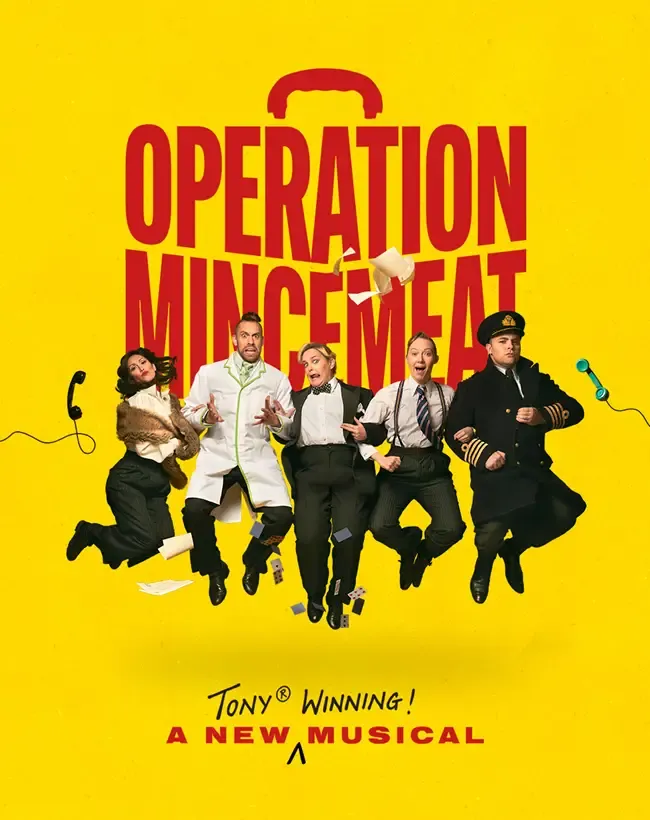
Off-Broadway is a New York designation attached to specific union agreements. A production in Chicago, Los Angeles, or Minneapolis is regional theatre, however similar the scale. London’s rough analogue is Off-West End, covering the city’s smaller producing houses and fringe venues — which is where Operation Mincemeat started, years before it reached either the West End or Broadway.
So “Off-Broadway tour” is a marketing phrase, not a category. It usually means a show that once played Off-Broadway is now touring.
Which should I book?
Whichever has the show you want to see.
Broadway gets you the largest productions and the ones the Tonys have endorsed. Off-Broadway gets you new work earlier, in a room where the back row is forty feet from the stage rather than a hundred, generally for less money. Off-Off-Broadway gets you things nobody has decided about yet.
It is also worth knowing how short most runs are before you postpone anything: the median Broadway production closes in under three months, and Off-Broadway bookings are frequently shorter still. If a show is on your list, the safe assumption is that it will not wait — the run-length data makes that case in detail, and our list of announced closings is the short version.
The terms, side by side
- Broadway
- A production in a New York theatre of 500 seats or more that is designated as a Broadway house, playing under Actors' Equity's Production Contract. This is the only tier eligible for the Tony Awards.
- Off-Broadway
- A New York production in a house of 100 to 499 seats, under Equity's Off-Broadway agreement. It includes major nonprofit companies — the Public Theater, Playwrights Horizons, Second Stage, the Atlantic — as well as commercial open-ended runs.
- Off-Off-Broadway
- A New York production in a house of 99 seats or fewer, typically under showcase or small-theatre terms. Historically the experimental wing of the city's theatre, and still where a great deal of new work is first staged.
- Transfer
- A production moving up a tier, almost always Off-Broadway to Broadway. It is remounted rather than simply relocated: recapitalised, often partly recast, and restaged for a larger house.
- Eligible house
- One of the New York theatres designated as Broadway for awards purposes. Playing in one is what makes a production Tony-eligible, which is why the list matters commercially as well as artistically.
Frequently asked questions
Is Off-Broadway lower quality than Broadway?
No. The categories describe the size of the room and the union agreement, not the standard of the work. A great many of the most acclaimed plays and musicals of the last fifty years opened Off-Broadway, and several — Hamilton, Rent, A Chorus Line, Hadestown — moved to Broadway only after proving themselves in a smaller house.
Can an Off-Broadway show win a Tony Award?
No. Tony eligibility requires a production to play in one of the theatres the Broadway League and the American Theatre Wing designate as eligible. Off-Broadway work is recognised by other awards instead — principally the Lucille Lortel Awards and the Obie Awards, while the Drama Desk Awards consider Broadway, Off-Broadway, and Off-Off-Broadway in the same categories.
Are Off-Broadway tickets cheaper?
Usually, and often substantially. A smaller house has lower running costs and a lower capitalisation to recoup, so the economics do not demand Broadway prices. It is not a rule, though — a sought-after Off-Broadway run with a short booking period can be harder to get into than a long-running Broadway musical.
Is a show in Chicago or London Off-Broadway?
No. Off-Broadway is a New York City designation tied to specific Equity agreements, so it does not travel. Work in other American cities is regional theatre, and the rough London equivalent is Off-West End, which describes the city's smaller producing houses and fringe venues.
What does it mean when a show transfers?
It means the production moves to a larger tier, most commonly Off-Broadway to Broadway. The production is usually recast in part, rebalanced for a bigger room, and recapitalised, so a transfer is closer to a new production of the same show than a change of address.
Is Off-Off-Broadway still a thing?
Yes, though the term is used less than it was. It began as a 1960s movement around venues like Caffe Cino and La MaMa, and today mostly describes small houses of 99 seats or fewer working under Equity's showcase and small-theatre terms — frequently new plays, short runs, and developmental work.
Sources
- Actors' Equity Association — agreements and contracts Actors' Equity Association Accessed
- The Broadway League — about the industry The Broadway League Accessed
- Internet Off-Broadway Database Lortel Archives Accessed